

What's new with Embedded Finance in October?
October was about two things: a faster path for corporate programs to put cards in their employees' hands, and more control for every program straight from the dashboard. From employee cards issued under a single company verification to disputes that now reach Mexico, here's a roundup of everything we've shipped.
(And if you haven't seen it yet, our Card Issuing page has a full look at what you can build on Reap.)
1. Launch Retail and Corporate Card Programs Without Building Your Own Verification Stack
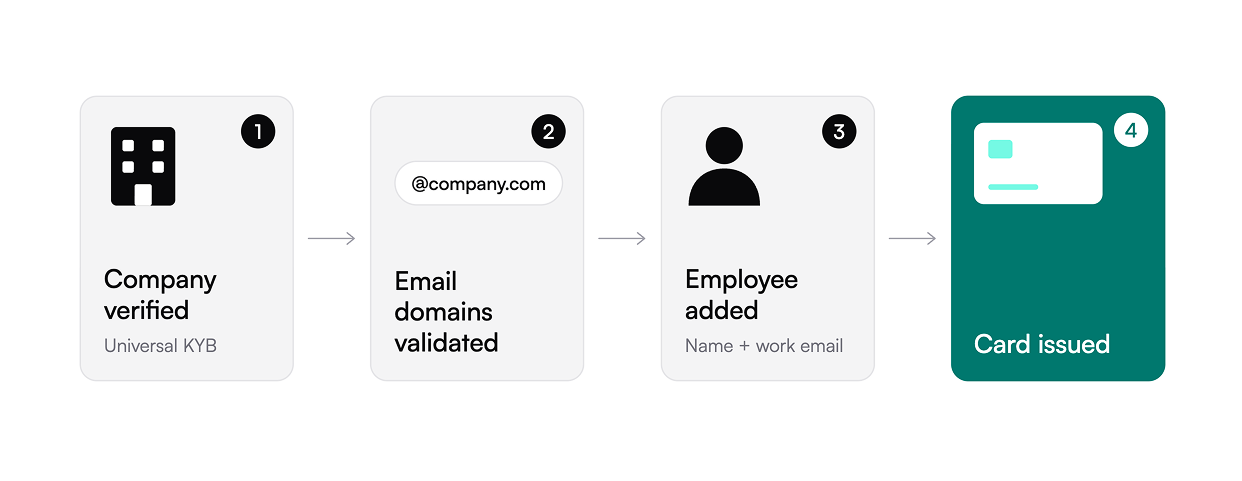
Our new Compliance module lets you launch retail and corporate card programs without building your own verification stack. Your users still complete full identity checks, and each business still has its registration, ownership, and the people who run and own it verified. Reap can now run that process instead of your team, in one of two ways:
- End to end: Reap handles verification for you, from first check to approval.
- Using what you already hold: send us the data and documents from your own verification. Once we’ve reviewed and approved them, your users or businesses can get cards without onboarding a second time.
Already running a retail program with us? You can now launch corporate card programs too. Verify the company once, then issue cards to its employees with just a name and a work email, without a separate KYC check for each cardholder. Commercial cards need to be enabled on your program first, so talk to your account manager to get started.
Learn more: KYC → · KYB → · Corporate employees guide →
2. Let Your Users Pay, Get Paid, and Move Between Fiat and Stablecoins
Our new Money Movement module brings Payments, Collections, On-Ramp and Off-Ramp together, so your users can do more with their money than spend it on a card.
- Payments: let your users pay anyone across 45+ corridors (25+ via SWIFT and 18+ local rails), funded in stablecoins or fiat and delivered in local currency. Explore Payments →
- Collections: Let your users collect payments easily. Give each user a dedicated virtual account number and a hosted payment link to share. Incoming funds, including partial payments, are matched to the right user automatically, so there's no manual reconciliation. Explore Collections →
- On-Ramp: let your users convert fiat from their own bank account into stablecoins. Explore On-Ramp →
- Off-Ramp: let your users convert stablecoins to fiat and cash out to their own verified bank account. Explore Off-Ramp →
Money Movement is coming to Reap API. You'll be able to add it to without a separate integration or onboarding again. Want it for your program? Talk to your account manager.
3. Disputes: from filing to refund, in more places
Disputes got a big step forward this month:
- No cardholder signature needed. File fraud and consumer disputes over the API on a cleared transaction. The case starts as
RECEIVED, and Reap takes it from there. - Refunds land on the transaction. When a dispute is won, the credit appears as a new
DISPUTE_REFUNDevent, soamount.refundedandamount.currentupdate just like a merchant refund. The refund covers the charge plus a proportional share of the FX markup and ATM variable fee. - Now live for Mexico card programs. MX programs can file disputes in sandbox and production, with the same flow HK programs already have. Follow every status change on
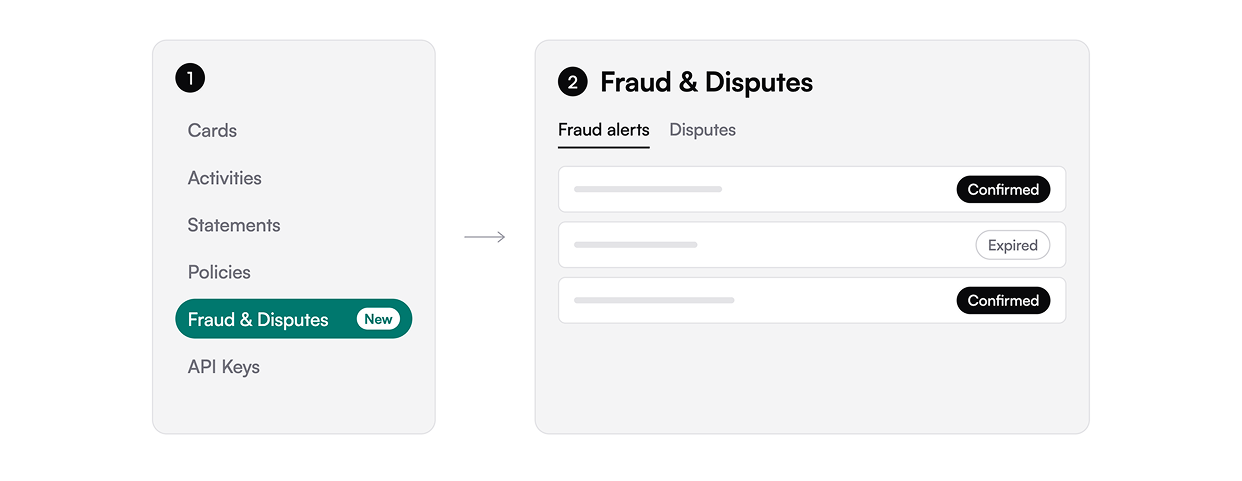
CARD_DISPUTE_STATUS_UPDATED. - File and track from the dashboard. A new Frauds & Disputes section lets operators file a chargeback on a cleared transaction and follow it from Received through Reviewing and Submitted to its final outcome. (Available on SG projects today.)
A dispute is how the cardholder gets their money back, while a confirmed fraud alert blocks the card. They're separate, and both can sit on the same transaction.
4. Order physical cards from the dashboard
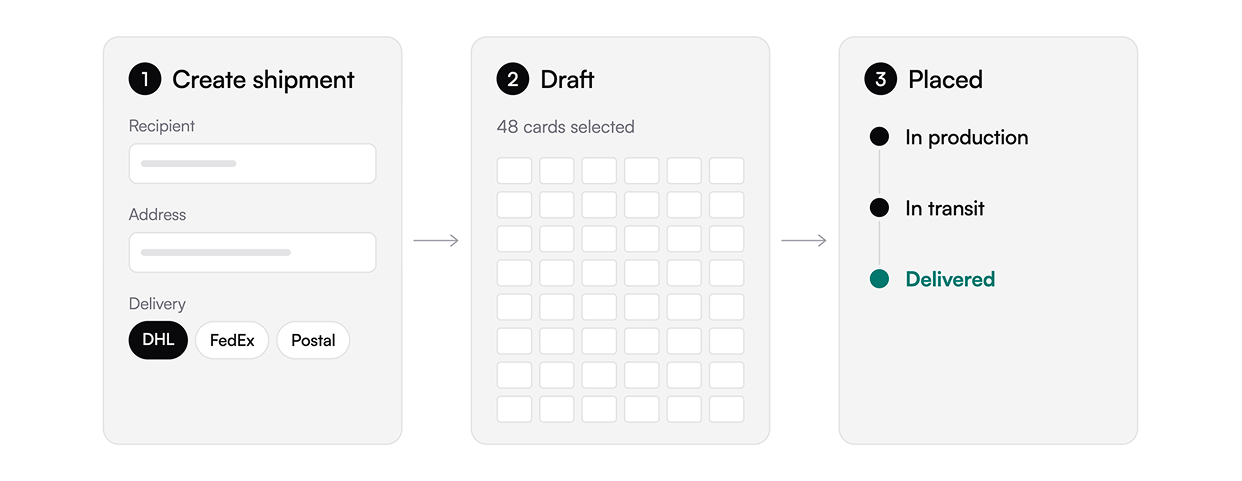
Creating a card shipment used to need the API. Now your operators can do it end to end from the Card shipments table:
- Enter the recipient, address and delivery method (courier with DHL or FedEx, or postal)
- Pick up to 200 active physical cards per shipment, each shipping with its issued design or a design you choose
- Review the shipment as a draft, then place it with the manufacturer
- Track status through production and delivery, and simulate every stage in sandbox
You can also now see the card designs assigned to your project in a new Designs tab under Cards.
5. Fee statements, right in the dashboard
Finance teams can now request and download fee statements without an API call. Pick a date range and click Send request, and you'll get a CSV listing every fee Reap billed, one row per fee, so you can check your invoice line by line. Most statements are ready within a couple of minutes and stay available for 180 days. Statements are in beta, so the columns in the file may still change.
6. Sharper spend policies
Spend limits and authorization count limits can now be scoped when you create or edit them. Narrow a limit to specific channels, merchant categories or merchant countries. A transaction has to match every filter you set, and a limit with no filter still applies to everything.
7. Other upgrades worth knowing about
- Recover a card activation code. If a cardholder loses the code that shipped with their physical card, operators can now show it from the dashboard, after confirming the cardholder's identity.
- New sandbox simulations. Simulate a card block with a reason (and unblock it back to active), simulate an incremental authorization the way a merchant adds a tip, and decline that increment while the transaction stays pending.
- Reset a company application. For Universal KYB testing, send a submitted company back to pending so you can run the flow again.
Stay in the Loop
Every update ships to our changelog in the API docs.
Ready to build?
Explore the Embedded Finance docs or reach out to your account manager to enable any of these features.


