Business Account The unified account layer for stablecoin-enabled businesses
Learn more
Embedded Finance Launch branded financial products on Reap's infrastructure, one API integration
Learn more
Money Movement
compliamce
Agentic Payments Agentic spends on any merchant, anywhere. Agent-native checkout live today.Explore
One stack, direct or embedded.See pricing

Verify your business customers. Without building your own end-to-end KYB setup.

Let Reap run business verification end to end. Or bring businesses you've already verified, so your clients don't have to onboard twice. Whichever route you pick, you get compliant business onboarding without building or running the entire stack yourself.

LESS TO BUILD

Launch sooner, without building the entire KYB setup.

A corporate card program needs business checks, checks on directors and owners, a place to store documents, and rules for each country. That's months of work before the first card goes out.
Infographic placeholder

Skip most of the build

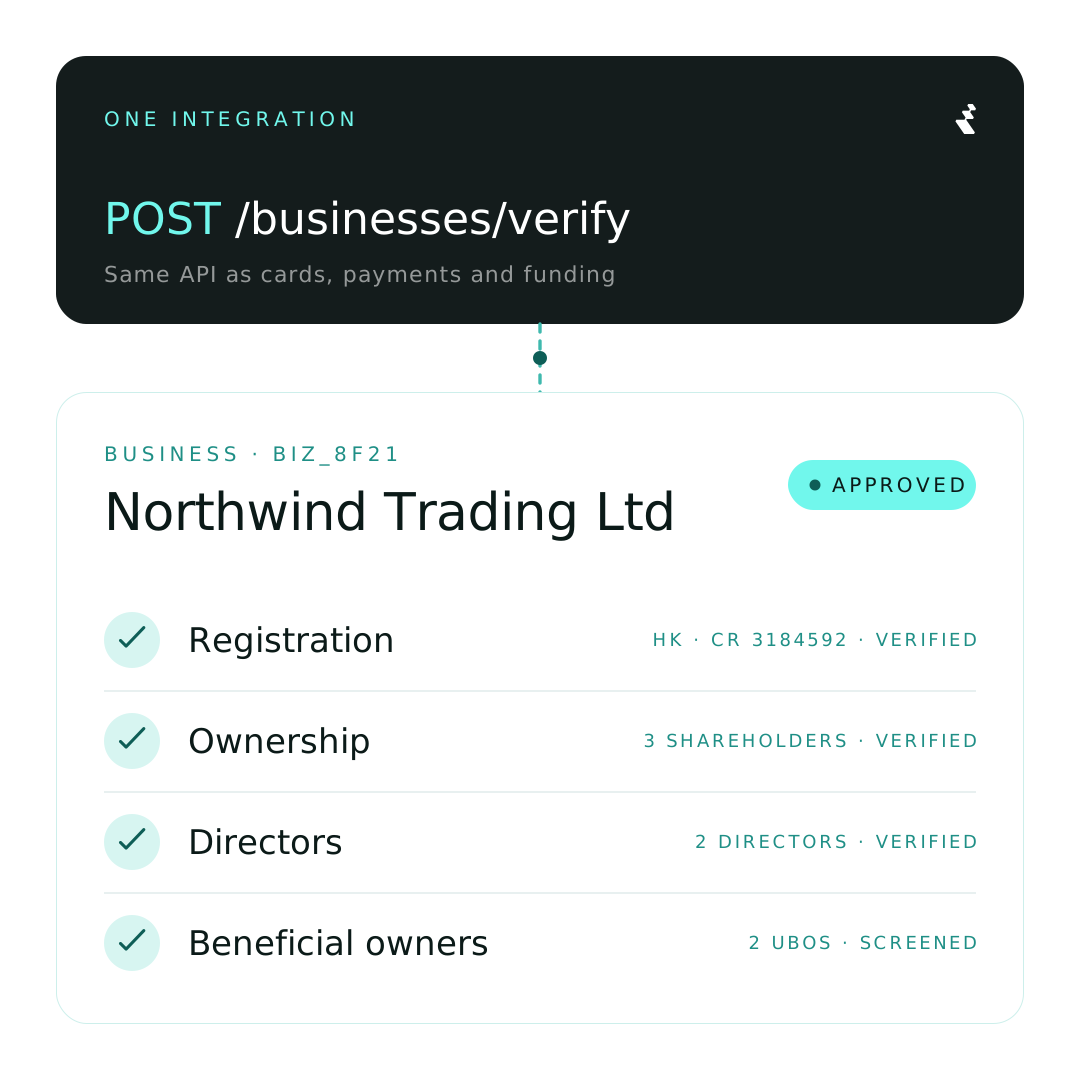
Reap checks your clients' businesses, including registration and ownership through one integration. If you don't have compliance tooling, you don't need to build it.

Infographic placeholder

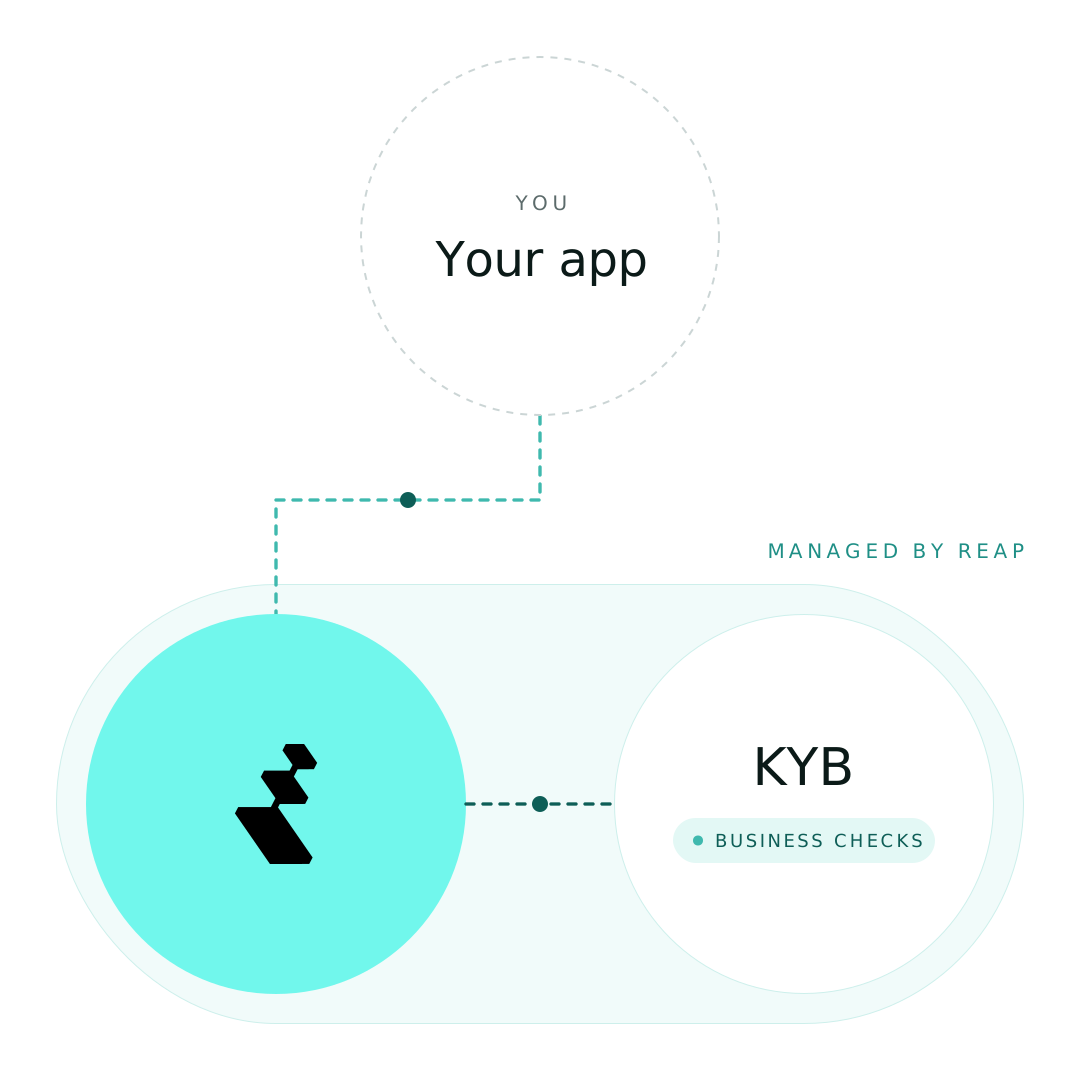
No KYB provider relationship to find or manage

If you haven't built one yet, you don't need to. That's Reap's relationship to manage, not yours.

Infographic placeholder

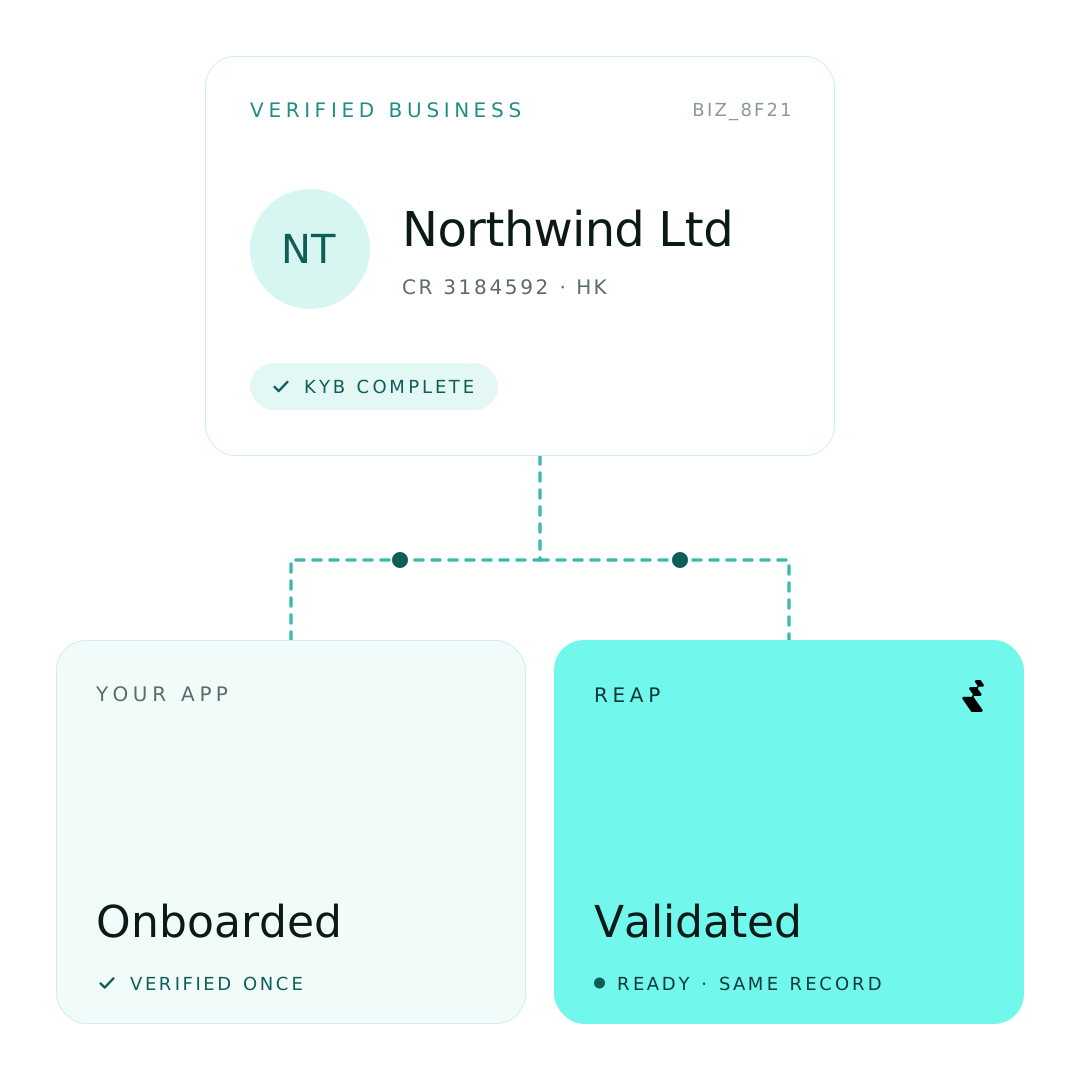
No double onboarding for your clients

If you've already verified a client's business, you don't need to do it again once Reap has validated it.

VERIFICATION METHODS

Flexible KYB methods. You pick the one that fits.

Not every platform's setup looks the same, so there are two ways to verify a business. Both use the same API, the same webhooks and the same company statuses. Pick the one that matches where you are today.

01

Managed KYB —
starting from scratch

No business verification set up yet? No worries. Reap hosts the verification session. You send a redirect link, Reap returns a session URL, and your client's representative completes the form. You never touch corporate or identity documents.

02

Universal KYB —
already verified

Already verified a client's business? Submit the verified pack — registration details, ownership structure and supporting documents — and Reap reviews it. Bring data from whoever you work with, and your client's company doesn't have to re-onboard.

Whether you're starting from zero or bringing businesses you've already verified, there's a route that doesn't require rearchitecting your onboarding.

NO DOUBLE ONBOARDING

Protect your clients' experience.
No double onboarding.

Your client's business already proved who it was when it signed up with you. Sending its finance team back through a second verification is friction at exactly the wrong moment, and it lands on the people who decide whether to roll the program out.

Bring the verification you already hold
Universal KYB lets you pass it straight to Reap. Reap reviews it, approves the company, and its employees can get cards.
No second session. No chasing directors.
No one re-declares the ownership structure or hands over documents they've already given you. For established businesses, that's often the difference between a signature and a stalled deal.

PROGRAM SETUP

Two ways to hold the money.

Programs work differently, so you pick what fits.
Infographic placeholder

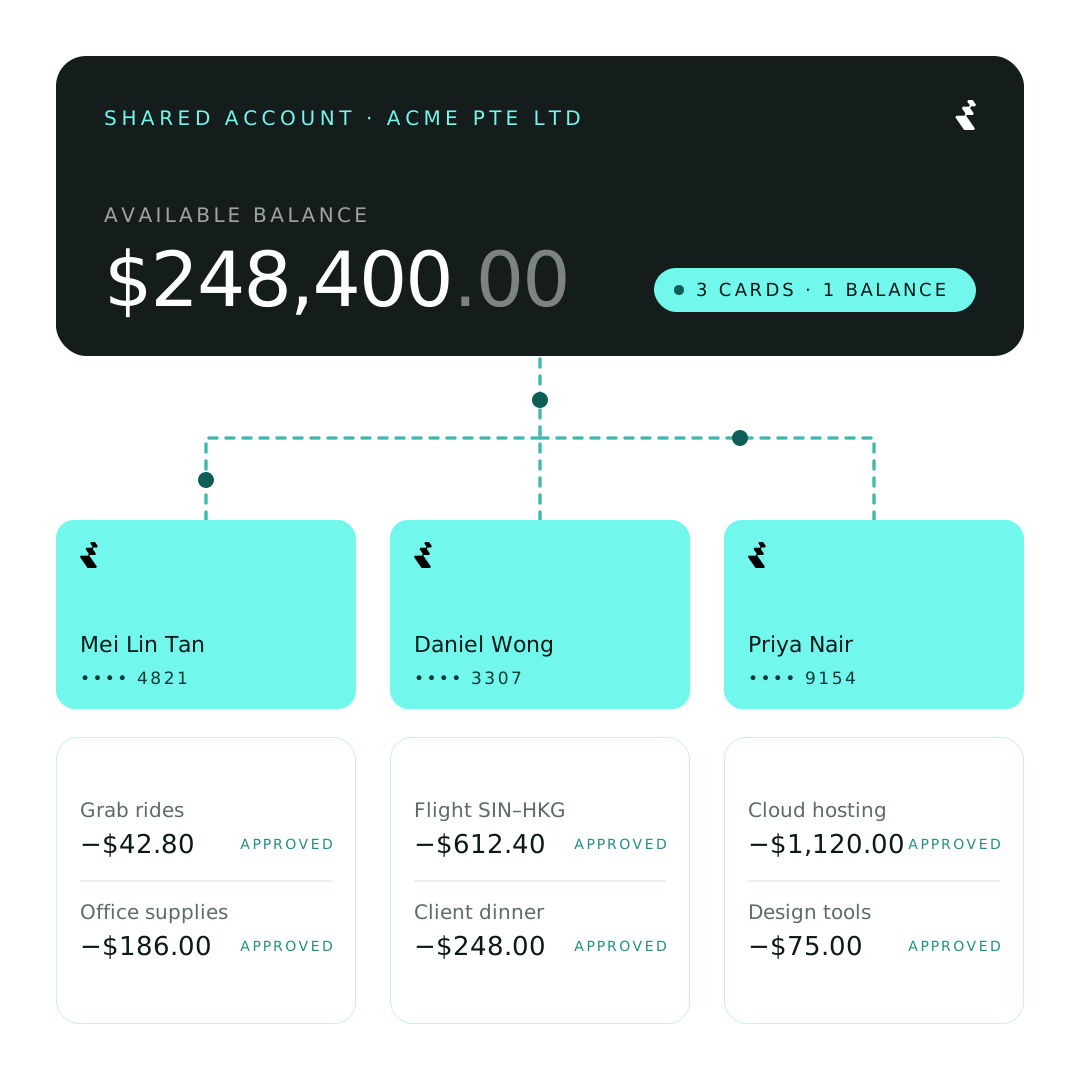
One shared account

The company funds one account for everyone. Suits expense management.

Infographic placeholder

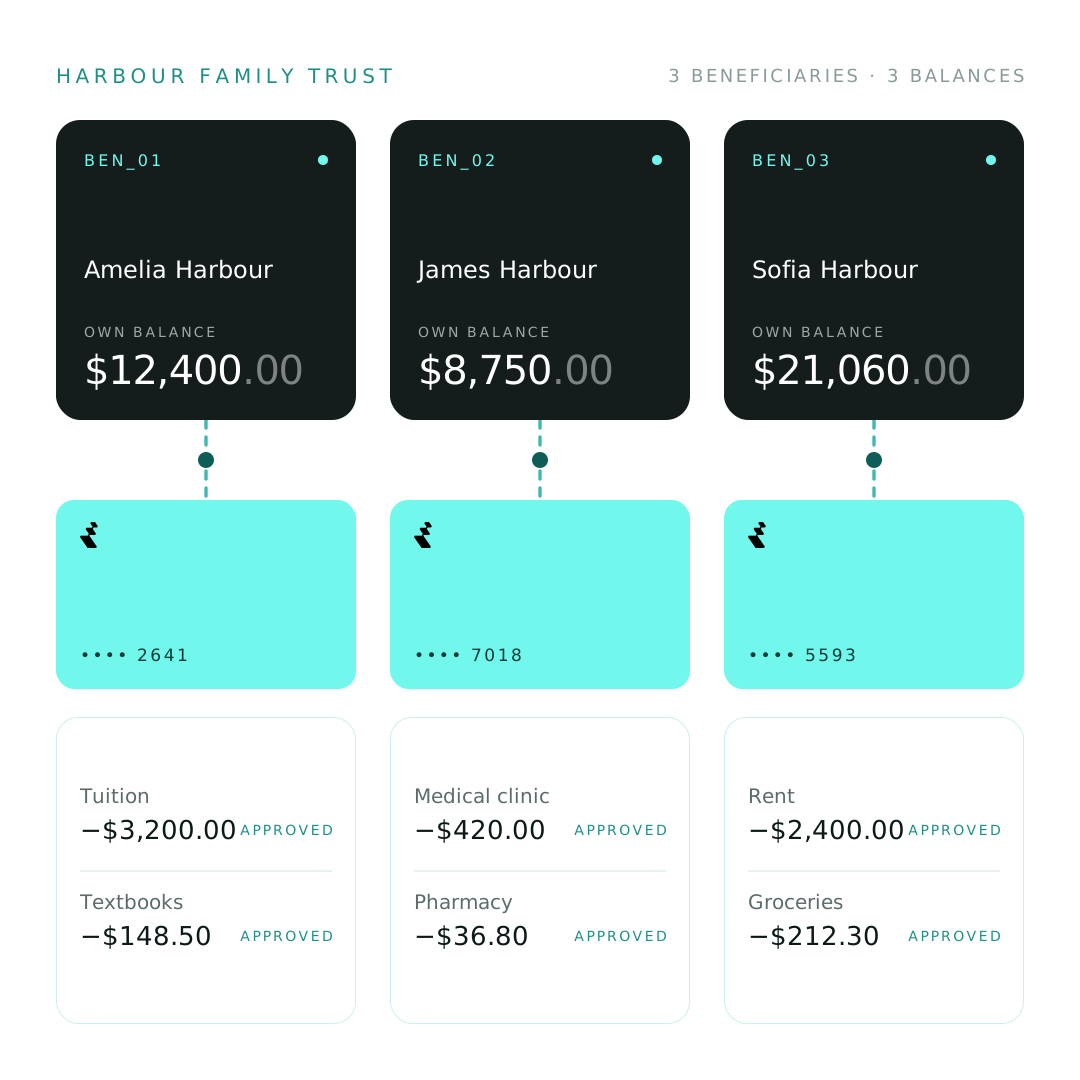
Individual balances

Each person holds their own balance. Suits trusts and other structured programs.

Infographic placeholder

No double onboarding for your clients

If you've already verified a client's business, you don't need to do it again once Reap has validated it.

KYB AND KYC

Issuing to individual users too? Reap supports KYC.

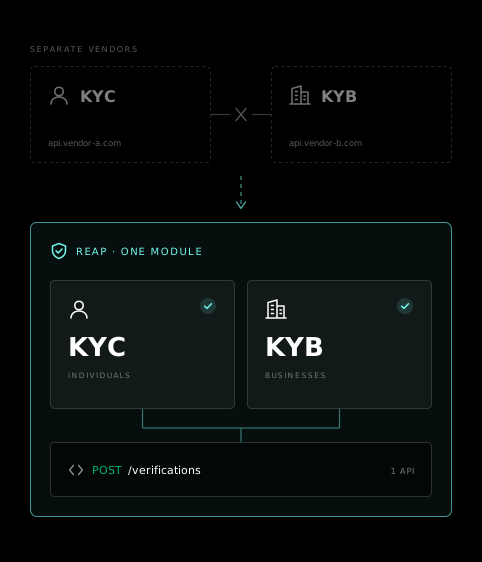
Reap API's Compliance module supports both KYB and KYC — so you can launch corporate card programs for businesses and retail card programs for individual users, all from the same integration.

One compliance layer. Both program types. No separate vendors to manage.

SEE KYC
One module, both program types
Three KYC methods

One module, both program types

Most compliance providers specialize in one or the other. With Reap, you don't stitch together separate vendors for business and individual verification. Both are built into the same module, under the same API.

MORE THAN KYB

Verification is one piece.
Reap runs the rest too.

The same integration, the same team, the same webhooks — whatever you add next. The information your approved companies have already given carries over. Adding a module won't mean onboarding again or giving the same details twice.

Card Issuing

Issue branded cards on Reap's Visa principal issuing license.

CHECK IT OUT

Payments

Stablecoin-funded fiat payouts across 45+ corridors.

CHECK IT OUT

Agentic Payments

Let AI agents spend, bounded by policy.

CHECK IT OUT

Sentry

Managed fraud monitoring, disputes and Visa compliance.

CHECK IT OUT
USE CASES

Business verification built on Reap

Whether you're onboarding your first client company or bringing over a verified book of business, the compliance work underneath is the same — and it's the part nobody wants to build twice.

01 For

Corporate card programs

You want your clients to be able to give cards to their employees. Each client company has to be verified first. Let Reap run the whole check with Managed KYB, or submit verification you already hold through Universal KYB. Once Reap approves the company, its employees can get cards.

01 For

Platforms that already verify businesses

You already run business verification, either because you onboard companies as clients or because you operate somewhere that leaves you no choice. There's no reason to put those companies through it again. Universal KYB lets you submit the business data and documents you already hold, and Reap reviews them. Your client's finance team doesn't notice a second onboarding, because there isn't one.

01 For

Corporate programs in more than one country

Each country has its own rules. Mexico, for example, needs an extra ownership declaration and more company details. Reap handles those differences behind the scenes, so your integration stays the same wherever the business is registered.

01 For

Web3-native teams

Your ops budget lives on-chain. Fiat conversion is the tax you pay to buy SaaS and AWS. With VIC, top up in USDC and transact against merchants globally — no fiat on-ramp in the middle.

01 For

Web3-native teams

Your ops budget lives on-chain. Fiat conversion is the tax you pay to buy SaaS and AWS. With VIC, top up in USDC and transact against merchants globally — no fiat on-ramp in the middle.

HOW IT WORKS

Get started in 3 steps

TALK TO OUR TEAM
01

Talk to our team

We agree on your KYB method (Managed KYB or Universal KYB), how the money is held, and any country-specific requirements. Your method is fixed once per project.
02

Build and test in the sandbox

The Compliance module works like the rest of Reap API, with REST endpoints and webhooks for status updates. Simulate the whole KYB flow, from creating a company to getting a decision, without running a real check.
03

Go live

Start verifying real companies. Once Reap approves a company, it's active and can hold accounts and issue cards. Listen for company status webhooks to keep your systems up to date.

What you do vs. what Reap does

You
Reap
Choose assets and pricing
Authorises spend against available balance
Maintain user balances (deposits/withdrawals/repayments)
Clears, reverses, and settles transactions
Fund the master collateral account
Holds the master collateral account
Keep custody and the user relationship
Polls your pricing feed for dynamic-rate assets
Applies your balance updates atomically
FAQ

Questions platforms ask before integrating KYB

01
What is Reap API's Compliance module?
+
Reap API's Compliance module is the verification layer for platforms building on Reap. It covers both KYB for businesses and KYC for individual users, through the same API, webhooks and statuses as the rest of the platform. Each business goes through full checks — registration, ownership, and the people who run and own it — run by Reap rather than your team. If you've already verified a business elsewhere, you can bring that across instead of starting again.
02
What KYB methods does Reap support?
+
Two. Managed KYB, where Reap hosts the verification session and your client's representative completes it. And Universal KYB, where you submit a verified business pack and supporting documents for Reap to review. You pick one per project during onboarding.
03
What's the difference between Managed KYB and Universal KYB?
+
Reap makes the final approval decision in both. Managed KYB suits a company that hasn't been verified yet, or a platform that would rather not handle documents at all — Reap hosts the session and collects everything. Universal KYB suits a platform that has already verified its clients and holds their business data. It avoids putting them through verification twice, and keeps the whole flow in your backend with no hosted session for the client. Managed KYB asks less of your engineering team. Universal KYB asks less of your client.
04
Do I need to manage my own KYB provider relationship?
+
Not if you haven't built one. Reap manages its verification provider relationships. If you already verify businesses yourself, Universal KYB lets you bring that work across.
05
Will my already-verified businesses be approved automatically?
+
Only if the submission meets Reap's standards. If anything is missing, Reap tells you exactly what's outstanding so you can fix it in one go.
06
Can I use a different method for different companies?
+
No. The method is set once per project, and every company in that project uses it.
07
What do I need to submit for Universal KYB?
+
Your verified business data, including at least one beneficial owner, plus core documents such as the certificate of incorporation, company profile and shareholding chart. Reap tells you what's still outstanding at each step, so you can fill every gap in one go.
08
Can I verify individuals as well as businesses?
+
Yes. The same Compliance module handles KYC, with three methods: Managed KYC, Sumsub Token Sharing and Universal KYC. No second vendor needed.
09
What's the difference between RESTRICTED and REJECTED?
+
REJECTED means the company failed its first check and was never approved. RESTRICTED means the company was approved before, but has since been restricted, for example after failing a later check or a compliance action such as deactivation. Its users stay on the platform, but their card payments are declined until the company is active again. In either case, contact your account manager.
10
What happens if Reap needs more information?
+
The company moves to ACTION_REQUIRED and your account manager gets in touch. Once the information is received, it goes back into review.
11
Who is responsible for AML and CTF?
+
You are, whatever setup you choose. Reap helps you meet those obligations. It doesn't take them over.
12
Do I need a compliance team?
+
You don't need a team to run the checks. Reap handles the provider, the documents and the status tracking. You do still need someone accountable for your regulatory obligations, like AML/CTF and sanctions screening.
13
Can I test everything in the sandbox?
+
Yes. You can simulate the whole KYB flow, including creating a company, submitting it and getting a decision, without a real check. For Universal KYB, simulation runs the same completeness check and sends the same webhook as a real review.
14
What happens if I add more Reap modules later?
+
The information your approved companies have already given carries over. Adding Card Issuing, Payments, Agentic Payments or Sentry won't mean onboarding again or giving the same details twice.
15
Do you support Mexico's extra requirements?
+
Yes. Mexico programs need an extra ownership declaration and more company details. Reap handles those through the same endpoints, so your integration stays the same.
Get Started

Verify your business customers on Reap

NEW: Now supporting stablecoin card programs across 100+ markets Learn more