
Key Highlights
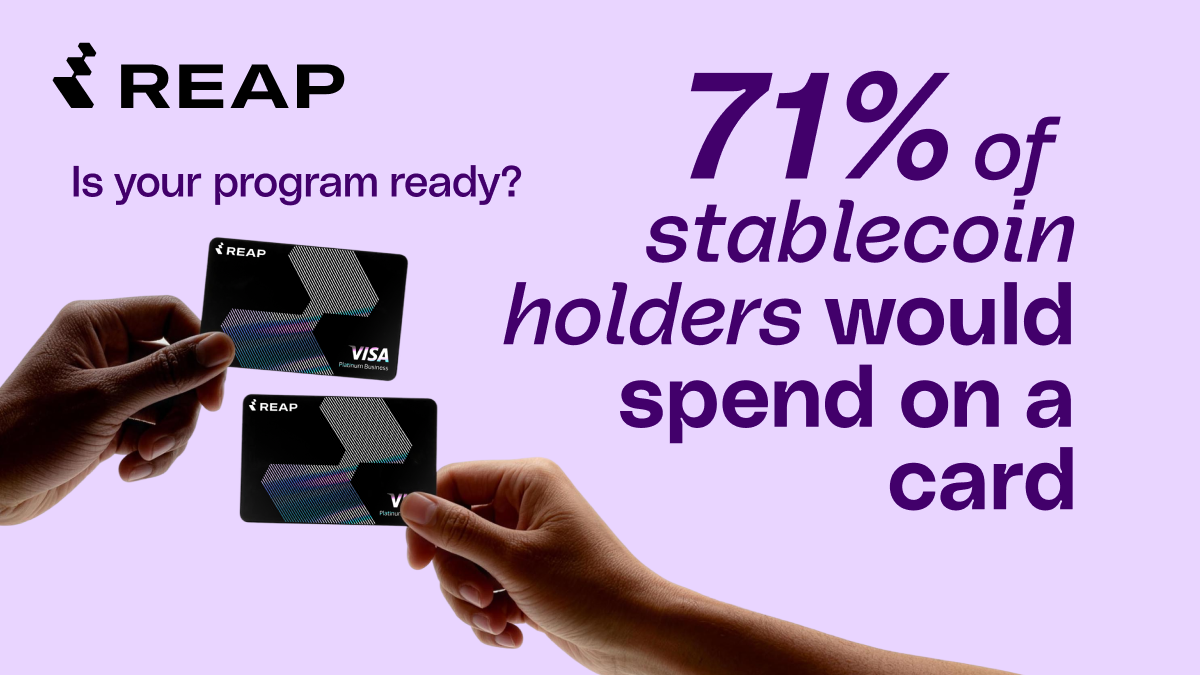
- 71% of stablecoin holders would use a linked card to spend their stablecoins, according to a 2026 survey of more than 4,600 people across 15 countries. The figure rises to 78% in low and middle-income economies.
- The number settles a question builders have been guessing at: demand to spend stablecoins from a card is real, mainstream, and strongest in dollar-scarce markets.
- A stablecoin card lets a user spend a stablecoin balance at any merchant on a card network, while the funding, settlement, and compliance happen behind the card.
- Turning that demand into a live program means filling the standard card-program roles: card network, issuer or BIN sponsor, processor, program manager, and a card manufacturer if the program issues physical cards. The stablecoin-specific work sits in the processor layer, where authorization has to clear against a stablecoin balance rather than a fiat ledger.
- The demand number does not remove the hard parts. Regulation, authorization rates, and funding UX still decide whether a program works.
Introduction
Stablecoin cards are moving from crypto niche to card-program priority. For years, the open question was whether users wanted to spend stablecoins from a card, or whether balances would stay parked in wallets and exchanges.
In BVNK's Stablecoin Utility Report 2026, a survey of more than 4,600 stablecoin holders across 15 countries found that 71% would use a linked card to spend stablecoins, rising to 78% in low and middle-income economies. Because the survey asked about a linked debit card, the finding signals card-based demand, not a specific credit or debit structure.
For card program builders, the next question is execution: what the demand means, why it is surfacing now, and what it takes to launch.
What Does 71% Stablecoin Card Demand Actually Mean?
The 71% figure measures intent to spend, not just intent to hold. Most stablecoin research tracks balances and transfer volume. This data point tracks something different: whether holders want to move from holding a stablecoin to using it at a checkout. When 71% say they would spend from a linked card, they are describing a gap between what they own and how they can use it, and a card is the instrument that closes it.
Two details matter for builders. The demand skews toward dollar-scarce markets, where the figure reaches 78%. A stablecoin card in those markets is not a novelty. It is dollar access at the point of sale for people whose local banking gives them limited exposure to dollars. The demand also sits with existing holders, so the addressable audience is the user base a wallet, exchange, or neobank already has, not a cold market it has to create.
The practical read: if your platform holds stablecoin balances for users, roughly seven in ten of them are telling you they would spend from a card if you offered one.
What Is a Stablecoin Card?
A stablecoin card is a payment card linked to a stablecoin balance rather than a fiat bank account. The user holds a stablecoin such as USDC or USDT. When they pay, the card network authorizes the transaction, the stablecoin balance funds it, and the merchant receives fiat in the normal way. Just like how you would use a credit or debit card to make a purchase at the convenience store
Why Is Demand for Stablecoin Cards Rising Now?
The possibility is that demand is surfacing now because holding stablecoins became common before spending them did. Stablecoin supply and transfer volume grew for years, but most of that value stayed inside crypto: on exchanges, in wallets, moving between protocols. Holders accumulated balances they could not easily use at a shop. A card removes that friction in one step, and the survey shows holders have noticed.
Dollar access is the second driver. In markets with weak local currencies or limited banking, a stablecoin is a way to hold dollars. A card turns that dollar balance into spendable money at local merchants, which is why demand runs highest in low and middle-income economies. The card is the difference between owning a stable store of value and being able to buy groceries with it.
What Does It Take to Launch a Stablecoin Card Program?
A stablecoin card program runs on the same roles as any card program: card network, issuer, processor, program manager, and card manufacturer. Each role has to be filled, whether the platform fills it or buys it in. A team can hold every stablecoin balance its users want to spend and still not issue a single card until those roles are covered.
Card network: The card network sets the scheme rules, provides the acceptance footprint, and settles between the issuer and the merchant's acquirer. In practice that means Visa or Mastercard. Because the card runs on a network merchants already accept, a stablecoin card can launch without signing up a single merchant.
Issuer: The issuer holds network membership and the BIN, and carries the financial and regulatory responsibility for the cards. Most platforms do not hold their own membership, so they work with a BIN sponsor: a licensed issuer that lets the program issue cards under its membership. Network access comes with that BIN, so one relationship usually covers both. Understanding BIN Sponsorships sets out how the license layer works.
Processor: The processor authorizes transactions in real time and handles clearing and settlement. On a stablecoin program this layer carries the most new work, because authorization has to clear against a stablecoin balance rather than a fiat ledger. When the cardholder taps, the system checks the balance, approves the spend, and settles in fiat to the merchant.
Program manager: The program manager handles integration, card lifecycle, branding, disputes, and day-to-day operations. That role sits with a third party on some programs and with the platform itself on others.
Card manufacturer: The card manufacturer produces and personalizes physical cards and handles logistics to cardholders. A virtual-only program does not need this role.
Compliance: Compliace sits across these roles rather than inside any single one. A card program verifies its cardholders and monitors transactions for fraud and financial crime, and that obligation does not shrink because the funding is a stablecoin. A stablecoin program adds screening of the on-chain funding source on top of standard cardholder KYC.
Generally, the default path is to buy each role from a separate provider. That works, but every party in the chain prices its own risk and becomes a dependency. Alternatives are to build your own layers of the above.
Why Is It Hard to Build a Stablecoin Card Program?
Filling every role is only part of the work. A stablecoin card program also has to clear regulation and solve funding.
Regulation limits where a program can operate, so the license question has to be answered market by market. A structure that is straightforward in one jurisdiction can be restricted in another. Funding decides whether that intent converts. Slow or confusing top-ups stop the habit from forming. With this many boxes to tick, most platforms resolve licensing and program structure by working with a licensed issuing partner rather than assembling both in-house.
How Reap Can Help
Reap helps crypto-native and fintech platforms launch branded Visa card programs with fewer moving parts. This includes wallets, exchanges, neobanks, and on-chain financial products that want to give users a card experience without building every issuing, compliance, risk, and operations layer themselves.
As a Visa® Principal Issuer, Reap supports eligible platforms with card issuing infrastructure and BIN sponsorship support, subject to program structure, jurisdiction, and compliance review.
Through one platform, Reap can support card lifecycle management, compliance operations, transaction monitoring, fraud controls, reporting, reconciliation, and card program operations.
For stablecoin-linked card programs, Reap helps connect USDC or USDT-based funding, collateral, or repayment models with fiat card-network settlement. Program availability depends on the approved program structure and applicable jurisdictional requirements. (BTW Reap now accepts USDC funding via Hyperliquid)
The final operating model depends on the program’s market, user type, funding model, and implementation needs. Depending on the approved setup, responsibilities may sit with Reap, the platform, or approved partners.
So what now?
The 71% figure marks a shift in the stablecoin card conversation. Demand is no longer the open question, it's materially there. Most stablecoin holders say they would spend from a card, and the pull is strongest in the dollar-scarce markets where that access matters most. The work now sits with the builders. The platforms that turn this demand into live programs will be the ones that treat the survey number as a starting point and put the issuing, processing, compliance, and network pieces in place to meet it.
Disclaimer
The information provided in this material is for general informational purposes only and does not constitute legal, financial, tax, or business advice. It should not be interpreted as a recommendation, offer, solicitation, or inducement to engage with Reap’s products or services. Any use of Reap’s services is at the user’s sole risk and discretion.
Reap makes no representation or warranty, express or implied, regarding the accuracy, completeness, or reliability of the information provided. Services are governed exclusively by Reap’s applicable legal agreements. Service availability, features, and eligibility may vary by jurisdiction and are subject to regulatory, card network, and operational limitations.
All trademarks, logos, and brand names are the property of Reap and/or their respective owners. References to third-party platforms or services are for descriptive purposes only and do not imply endorsement, partnership, or affiliation.
Reap’s services and information are provided on an “as is” and “as available” basis, without warranties of any kind. Reap shall not be liable for any loss or damage arising from the use of, or reliance on, this information or its services.


