
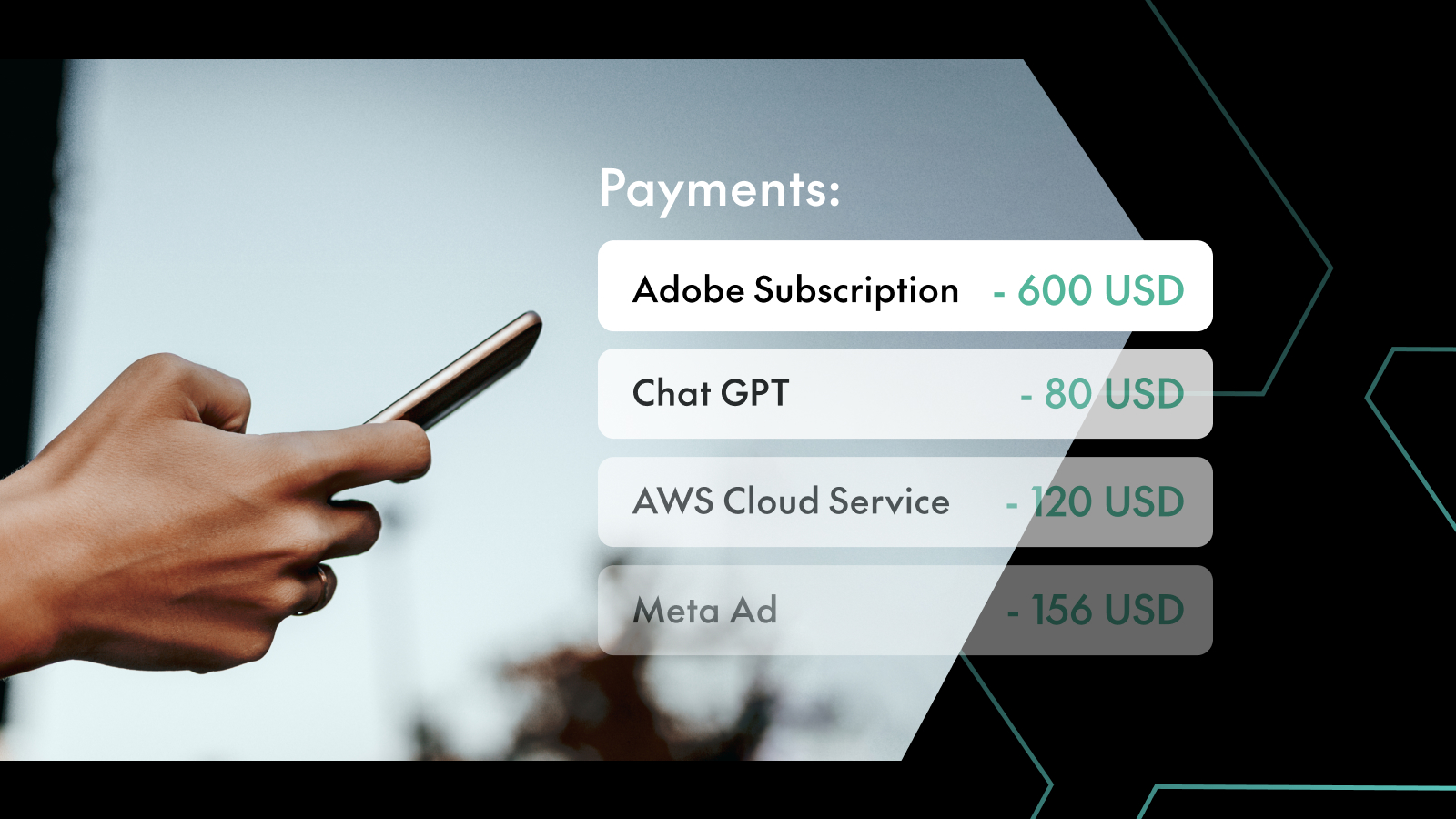
For any business that has expenses, a dedicated business account is a must-have. Why? Because it cleanly separates your personal spending from company transactions. This separation is the key to easier financial reconciliation, streamlined tax preparation, and clear access to financial data for your operations.
However, the traditional concept of a business account: a corporate bank account, was not designed and has not kept up with the way modern companies have been pioneering digital-first work in the last decade. For businesses built on Web3, which are operating at a global scale and are on-chain by default, the guardrails traditional corporate accounts impose immediately become a significant operational challenge. Outdated KYC requirements, currency acceptance and processing speed, this article explains the evolution of the business account and why Web3 companies require a new category of tool.
The Limitations of Traditional Banking for Global Businesses
A traditional bank account serves three core functions: (1) holding funds, (2) receiving payments, and (3) sending payments. This model works reliably for a local mom-and-pop shop operating in a single currency. But for modern businesses that operates online and across borders, the existing system creates significant friction due to legacy considerations.
Key bottlenecks include:
- Difficult and slow account opening processes. Onboarding with a traditional bank can be a document-heavy process, especially for remote teams or companies registered in a different country. Young companies often lack the historical data to fulfill these requests, creating a chicken-and-egg problem that most companies have to navigate.
- Slow and expensive international vendor payments. Cross-border wire transfers can take days to settle. Payments from or to underserved regions such as LatAm or Africa make take longer as there are more multiple intermediary banks the funds must travel through.
- High, often hidden, foreign exchange (FX) fees. Banks typically build wide margins into their FX rates, meaning you lose a percentage of your capital on every currency conversion. The more intermediary banks your funds travels through, the higher the fees tend to be.
How Web2 FinTech Platforms Solved the First Problem
As more businesses went digital, the 2010s highlighted key inefficiencies in how traditional banks handled international business payments, particularly high foreign exchange (FX) markups and slow transfer speeds. This created a clear opportunity for Web2 fintech platforms like Wise and Revolut. They built new, software-driven payment networks that offered a more direct, transparent, and cost-effective alternative for businesses operating across borders.
Their key innovation was to build a proprietary payment network that bypassed the slow and costly correspondent banking system. By separating the process of making payments globally from the place where money is held (a traditional bank), they redefined the 'business account' as a specialized tool for execution, not just a passive store of funds. This directly solved the problems of high FX fees and multi-day delays as money was no longer physically exchanging holders.
The Unique Financial Challenges of a Web3 Company
While Web2 platforms were a major step forward, technology adapted faster than money. Fintechs were designed to handle fiat payment. They were not made to connect with an on-chain economy, which creates a new set of challenges unique to a Web3 business.
- Hybrid Treasuries: A Web3 company's treasury is rarely just fiat. You need to manage and spend from balances of both cash and digital assets, such as stablecoins like $USDC and $USDT. Web2 platforms lack the rails to do this.
- On-Chain Operations: Critical business activities, like paying gas fees, funding protocols, and making DAO contributor payments, are completely invisible to traditional and Web2 financial tools.
- Globally Distributed Teams: For Web3 companies, having a globally distributed team isn't an expansion strategy—it's often the default from day one. Your tools must be borderless by nature.
- Operational Speed: Using mismatched tools for an on-chain business creates bottlenecks. Manually moving assets, off-ramping to fiat, and reconciling transactions across different systems is slow and directly inhibits growth.
A New Category for a New Business Model
The 2020s introduces the next stage in the evolution of financial tools: the crypto-friendly web3 business account. This new category is purpose-built to manage the specific complexities of an on-chain organization.
The following tables shows the evolution and how capabilities have expanded at each stage:
| Feature | Primary Asset | Geographic Scope | Core Function | Best For |
|---|---|---|---|---|
| Traditional Account (TradFi) | Fiat Only | Local | Hold & Transact Money | Brick-and-Mortar |
| Web2 Financial Platform | Fiat Only | Global | Move Fiat Efficiently | Online SMEs, SaaS |
| Online SMEs, SaaS | Fiat & Digital Assets | Fiat & Digital Assets | Manage All Operations | Web3 Companies, DAOs |
A company's financial tools must align with its business model. Because Web3 companies operate with digital assets and global teams by default, their financial requirements are fundamentally different from traditional businesses. Understanding the specific features that cater to these needs is the first step in building a scalable financial stack. But ‘what makes a business account ‘Web3’?’
—
Your Web3 business operates globally and on-chain. Your financial tools should too.
Get started with Reap Direct in minutes:
Sign up for free.


