What's New At a Glance
This month's updates let you enforce real-time spend controls without running your own authorization service, expand stablecoin funding to Base and Polygon, and bring mobile wallet provisioning to feature parity.
New
1. Spend Policies v1: Real-Time Card Controls, Enforced by Reap
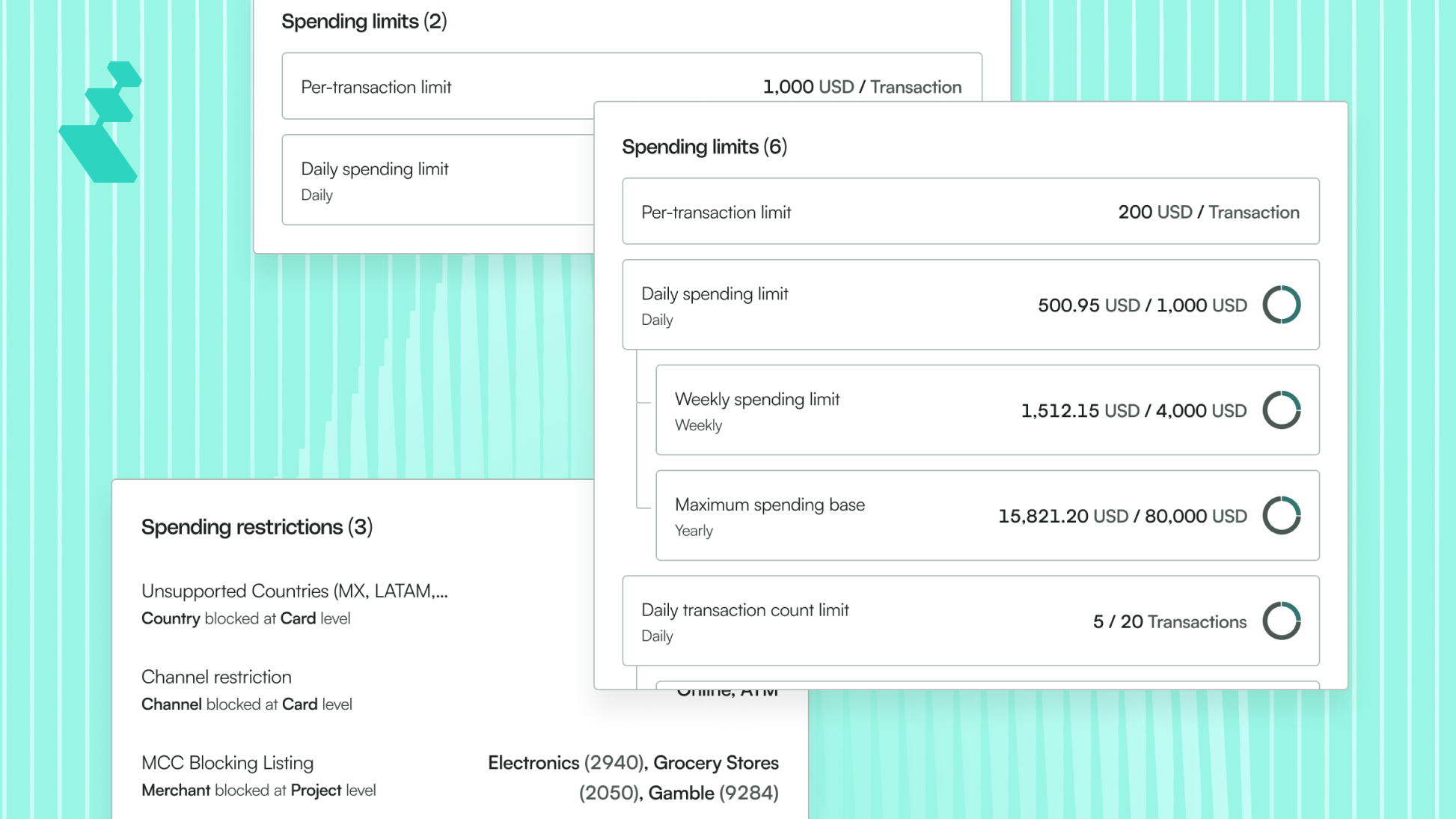
Spend Policies are declarative rules that control where, how much, and how often a card can be used — enforced by Reap in real time during authorization. You define the rule once; we make the decision on every swipe. No need to run your own authorization service or react to transactions after the fact.
What you can control:
- Spend limits over a calendar window, from daily through yearly, plus lifetime
- Transaction count limits over a window
- Per-transaction maximum amount
- Merchant restrictions by category (MCC), specific merchant, or country
- Channel restrictions: in-store, online, or ATM
Who this helps: Any platform issuing cards that needs program-level or card-level spend controls without building and maintaining real-time authorization infrastructure.
How to use it: Define policies through the API and attach them to your cards. Full guide in the Spend Policies documentation.
2. Google Push Provisioning

Push provisioning lets cardholders add their card to Google Wallet directly from your app, without entering any card details by hand. This closes one of the remaining gaps to full feature parity with your card issuing programs, so cards issued through Embedded Finance work the way your users expect on Android.
Who this helps: Platforms with Android users who want tap-to-pay from day one.
3. Sumsub Token Sharing via the Compliance API
If you already verify your users with Sumsub, you can now share Sumsub tokens with Reap through our Compliance API integration. Your users don't repeat KYC they've already completed, and you onboard cardholders faster.
Who this helps: Platforms using Sumsub for identity verification who want to reuse existing checks instead of running duplicate KYC flows.
How to use it: See the Sumsub token sharing documentation.
Enhancements
1. USDC on Base for User-Funded Programs
The User-Funded model now supports USDC on Base, giving your users a low-cost, fast option for funding their cards.
2. Polygon Support with Base-to-Polygon Bridging
We've added Polygon support, including bridging USDC from Base to Polygon over CCTP. Settlement works seamlessly across chains without you managing the bridging yourself.
3. Card Design API
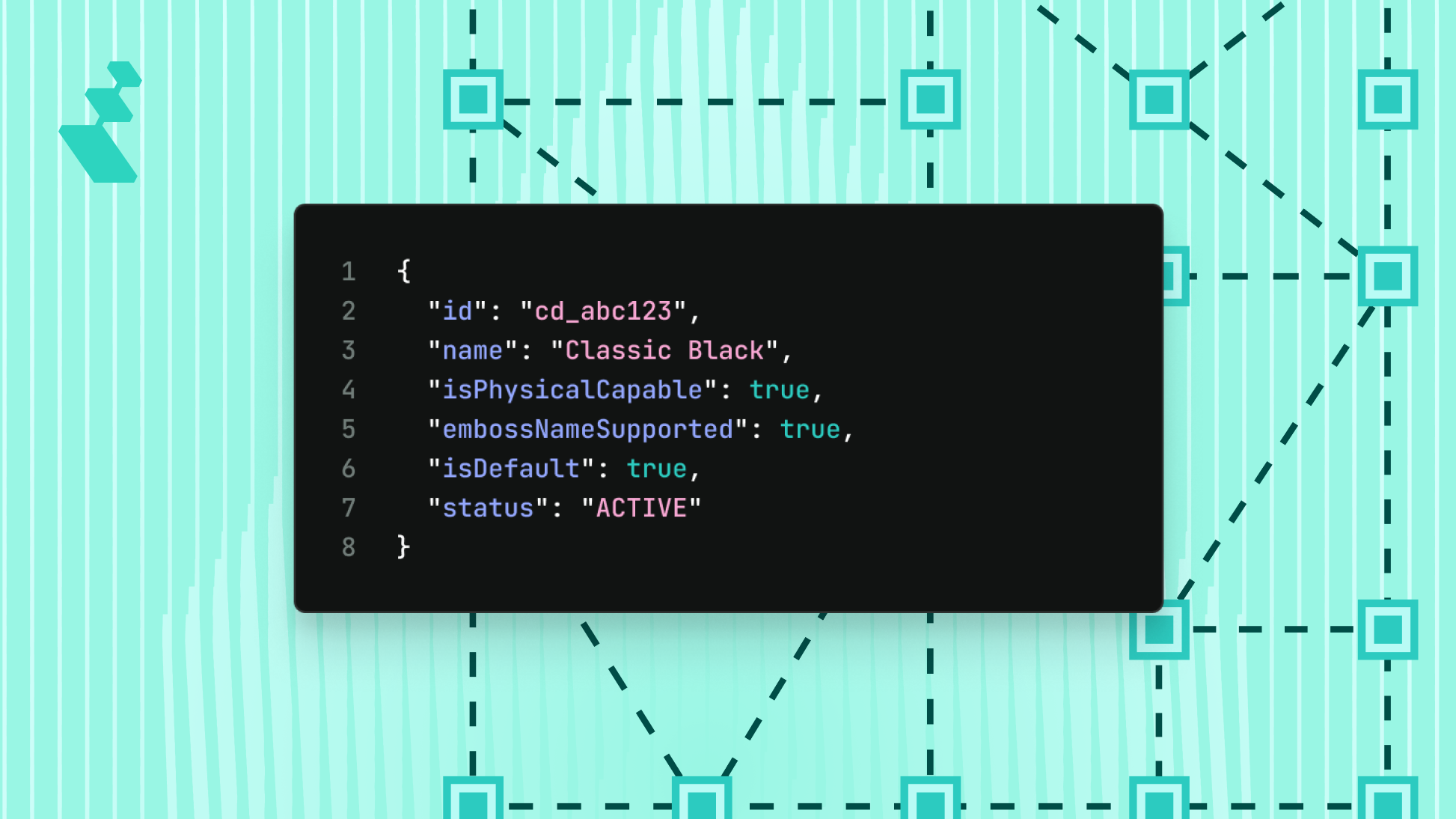
You can now retrieve the available card designs through the API, giving you visibility into exactly what you can issue before you issue it.
4. Platform Limit Profiles
Platform-level limit profiles — spend caps, per-card quotas, and other program quotas — are now enforced across programs. This lets new programs go live in production earlier with guardrails in place.
Improvements
1. Dashboard Fixes and Refinements
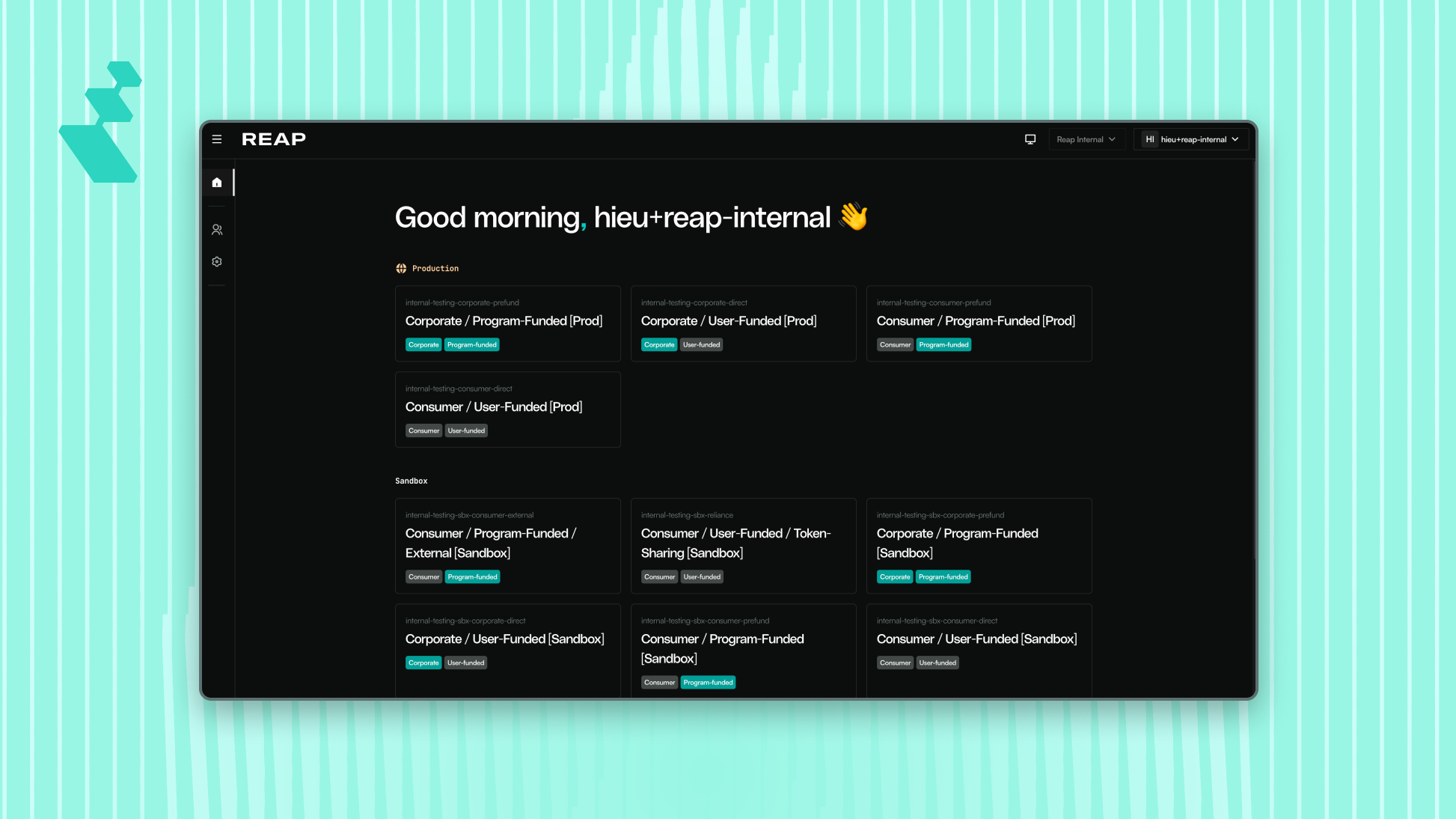
A round of bug fixes and improvements across the recently released platform dashboard at platform.reap.global.